
AI-Generated Product Photography: Is It Cheap or Worth It for Your Brand? | Media Initiation
SPREAD THE WORD ON:
AI Generated Product Photography: Is It Cheap or Worth It for Your Brand?
Product photos can make or break a sale. When customers shop online, they cannot touch or test your product. They only see images. That is why strong visuals matter so much.
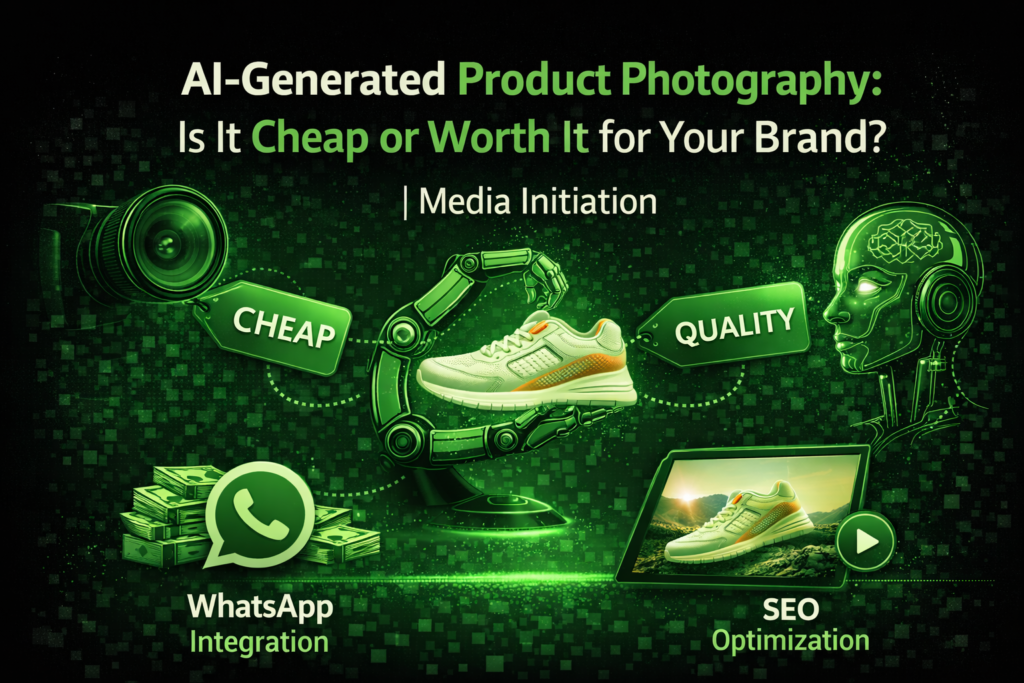
In recent years, AI generated product photography has become popular. Many brands are now using AI tools instead of traditional photoshoots. But the real question is simple. Is it just a cheap option, or is it actually worth it for your brand?
At Media Initiation, we see many businesses confused about this shift. Let us break it down in simple words.
What Is AI Generated Product Photography?
AI generated product photography uses artificial intelligence to create product images without a full physical photoshoot. Instead of renting a studio, hiring a photographer, and setting up lights, you upload a product image into a tool. The AI then places your product into different backgrounds, scenes, and styles.
For example, a skincare bottle can appear on a marble table with soft sunlight. A shoe can appear on a city street or in a luxury studio setup. All this is created digitally.
This process is powered by what is called generative AI product photography. The AI studies thousands of images and creates new, realistic scenes based on prompts.
How an AI Product Photography Generator Works
An AI product photography generator works in a simple way:
You upload a clear image of your product.
You select a style or write a description of the scene.
The AI creates new product images with realistic lighting and background.
Some advanced tools also adjust shadows, reflections, and angles. The final image can look close to a professional photoshoot.
This method is fast. In many cases, you can generate multiple product images in minutes instead of days.
Why Brands Are Choosing Generative AI Product Photography
Many brands are moving toward generative AI product photography for clear reasons.
1. Lower Cost
Traditional product photography includes:
Studio rent
Photographer fees
Lighting equipment
Editing costs
Model fees if required
These costs can be high, especially for small brands. In comparison, an AI product photography generator often works on a monthly subscription or pay-per-image model. This makes it more affordable for startups and small businesses.
2. Faster Turnaround
If you launch new products every month, organizing a photoshoot every time is slow. AI generated product photography allows quick content creation. You can test new backgrounds, themes, and campaigns without waiting for physical setups.
3. Creative Freedom
With generative AI product photography, you are not limited to one location. You can place your product:
On a beach
In a luxury home
In a minimal studio
In a festive setup
You can experiment without extra cost.
Is AI Generated Product Photography Always Better?
Not always.
While AI generated product photography offers speed and savings, it also has limits.
1. Realism Can Vary
Some AI images look very real. Others may look slightly artificial. If details like texture, fabric quality, or fine material matter a lot, traditional photography may still perform better.
Luxury brands, for example, often prefer real studio shoots to maintain full control over quality.
2. Brand Identity Matters
Your brand style should guide your decision. If your brand focuses on authenticity and real lifestyle scenes, then pure generative AI product photography may feel less natural.
However, if your brand is modern, digital, and fast moving, AI visuals may fit perfectly.
SEO and Ecommerce Benefits of AI Product Photography
High-quality images are not only about looks. They also affect online performance.
When you use AI generated product photography to create multiple angles and backgrounds, you can:
Improve product page design
Increase time spent on your website
Reduce bounce rate
Increase conversion rates
Google also ranks ecommerce websites better when they provide rich product content. More images mean more engagement.
Using an AI product photography generator helps you maintain a consistent visual library for your website and social media.
When AI Generated Product Photography Is Worth It
AI product photography is worth it if:
You are a startup with a limited budget
You need fast content for ads
You test multiple marketing campaigns
You sell on marketplaces like Amazon or Shopify
You want to scale product listings quickly
For these brands, generative AI product photography is not just cheap. It is practical.
When Traditional Photography Is Still Better
Traditional photoshoots may still be better if:
You are a luxury or premium brand
Product texture and material details are critical
You need custom lifestyle shoots with real models
You want unique storytelling visuals
In some cases, a mix works best. Many brands now combine real photography with AI generated product photography to reduce cost but keep quality.
The Smart Approach for 2026
The smartest brands do not see this as a competition between AI and traditional photography. They use both strategically.
For example:
Use real photos for hero banners and main campaigns.
Use an AI product photography generator for social media posts and ads.
Use generative AI product photography to test new creative ideas before investing in a full shoot.
This balanced approach protects brand quality while saving money.
Is AI Generated Product Photography Cheap or Valuable?
It depends on how you use it.
If you use AI only to cut costs without caring about quality, it may hurt your brand image. But if you use AI generated product photography wisely, it becomes a powerful tool.
The real value is not just in saving money. It is in speed, flexibility, and creative testing.
In 2026, brands that adapt to smart tools will move faster than those that rely only on old systems.
Final Thoughts from Media Initiation
At Media Initiation, we believe every brand should focus on results, not trends. AI generated product photography, AI product photography generators, and generative AI product photography are tools. They are not magic solutions.
If your goal is to grow online, improve product presentation, and manage budget wisely, AI photography can be worth it. But your brand identity and audience expectations must guide the final decision.
Strong visuals sell products. Whether created by a camera or AI, what matters most is how well they represent your brand and connect with your customers.
give Media initiation a shot